Author: im_admin

  • Free vs Paid E-commerce Platforms | Which Is Better for Your Business?

    Free vs Paid E-commerce Platforms | Which Is Better for Your Business?

    Starting an online store sounds exciting… until you have to choose the platform.

    And that’s where most businesses get stuck.
    Should you go with a free e-commerce platform to save money? Or invest in a paid platform for better features and long-term growth?

    The truth is, there’s no one-size-fits-all answer. But there is a smarter way to think about it.

    In this post, we’ll break down the real differences between free and paid e-commerce platforms, including the hidden costs most people don’t talk about, so you can make the right call for your business.

    What Is a Free E-commerce Platform?

    A free e-commerce platform lets you create an online store without paying upfront platform fees.

    Popular examples include:

    • Wix Free Plan – drag-and-drop builder with basic store features
    • Square Online (Free tier) – good for small local businesses
    • WooCommerce – free plugin for WordPress (though hosting costs apply)

    These platforms typically offer basic store setup, a handful of themes, limited product listings, and simple payment options.

    Free platforms work well for:

    • Complete beginners testing a business idea
    • Hobby stores or side projects
    • Very limited budgets

    But here’s what the “free” label often hides.

    The Real Cost of Free Platforms

    Most free platforms aren’t truly free; they shift costs elsewhere:

    • Transaction fees – Some charge 2–3% per sale on top of payment processor fees
    • Forced branding – Your store URL or footer may show the platform’s name (e.g., yourstore.wixsite.com), which looks unprofessional
    • Paid plugins – Core features like abandoned cart recovery, advanced SEO, or email marketing often require paid add-ons
    • Migration costs later – If you outgrow the platform, moving your store, products, and customer data is expensive and time-consuming

    So while you save money upfront, the long-term math often doesn’t add up.

    What Is a Paid E-commerce Platform?

    Paid platforms offer advanced features, better flexibility, and more control over your store. You typically pay a monthly or yearly subscription, usually anywhere from $20 to $100/month, depending on the plan and features.

    Popular examples include:

    • Shopify – one of the most widely used paid platforms globally
    • BigCommerce – strong for larger catalogs and B2B
    • Siyahfy – a modern platform built for businesses that want ease of use, fast performance, and professional branding without unnecessary complexity

    Paid platforms are best for:

    • Growing businesses with real sales targets
    • Brands focused on SEO and organic traffic
    • Sellers running paid ads and marketing campaigns
    • Anyone serious about building a long-term online presence

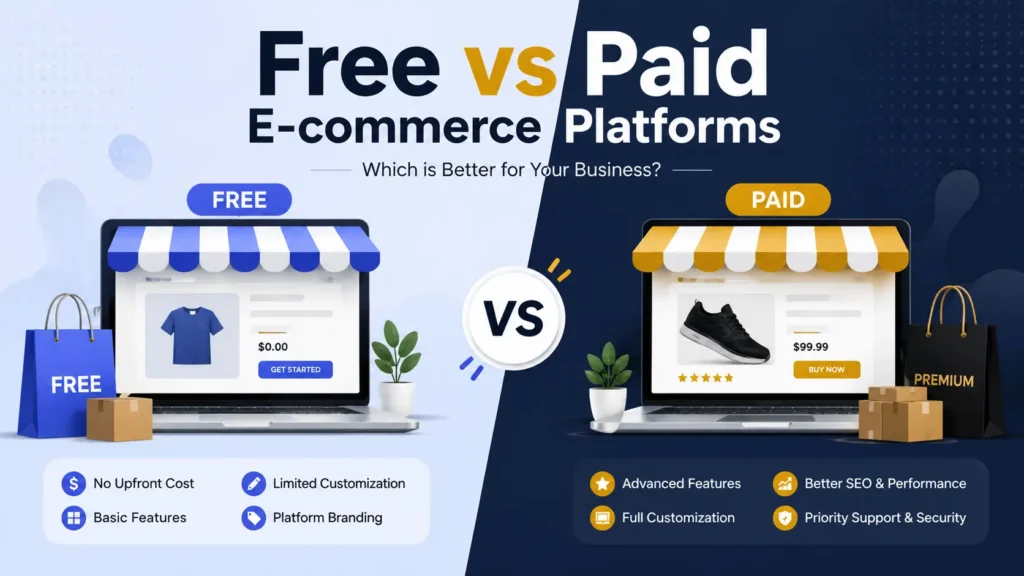
    Free vs Paid E-commerce Platforms – Key Differences

    FeatureFree PlatformsPaid Platforms
    Initial CostNo upfront cost~$20–$100/month
    Hidden CostsTransaction fees, paid plugins, brandingMostly transparent pricing
    CustomizationLimited themes and layoutsFull design and branding control
    SEO ToolsBasic settings onlyAdvanced SEO, meta controls, structured data
    Website SpeedCan be slow with limitsOptimized for performance
    ScalabilityStruggles at higher traffic/volumeBuilt for growth
    SecurityBasic SSL, limited updatesAdvanced security, regular patches
    SupportCommunity forums or email onlyDedicated technical support
    BrandingPlatform branding may appearFull professional brand control
    Best ForTesting ideas, hobby storesSerious online businesses

    Where It Really Matters

    1. Customization

    Free platforms often leave your store looking like thousands of others with the same templates and layouts. Paid platforms give you full control over design, customer experience, and brand identity. If how your store looks matters to your customers, this gap is significant.

    2. SEO Performance

    SEO is how your store gets found on Google without paying for ads. Free platforms often limit your ability to customize URLs, meta tags, and page speed, all factors Google cares about. Paid platforms typically include advanced SEO controls, faster load times, and mobile optimization built in.

    3. Scalability

    A free plan may work fine with 20 products and 50 visitors a month. But as you grow, you’ll hit storage limits, speed drops, and integration restrictions. Paid platforms are built to scale smoothly, whether you have 100 or 100,000 monthly visitors.

    4. Security and Support

    When something breaks during a busy sales season, you need fast help. Free platforms usually offer only community forums or slow email support. Paid platforms provide dedicated support, regular security updates, and backup systems, because downtime costs you real money.

    5. Branding and Customer Trust

    Customers notice details. A store URL like yourstore.platform.com or a footer that says “Powered by [Brand Name]” can quietly undermine trust. Paid platforms let you own your brand completely, with a custom domain, clean design, and no third-party logos in sight.

    Who Should Use a Free Platform?

    Free platforms make sense if you are:

    • Testing a business idea before committing real money
    • A hobby seller with no plans to scale
    • A student or freelancer building a portfolio store for learning purposes

    There’s no shame in starting free. It’s a smart way to validate your idea before investing.

    Who Should Use a Paid Platform?

    Invest in a paid platform if you are:

    • Building a real business with growth goals
    • Running marketing campaigns (SEO, ads, email)
    • Selling professionally to customers who expect a polished experience
    • Planning to scale your product catalog or traffic over time

    Your website is your 24/7 digital salesperson. Giving it the right tools makes a measurable difference.

    Why Growing Businesses Are Choosing Platforms Like Siyahfy

    Modern businesses don’t just want a website builder; they want a complete toolkit. Fast performance, clean design, secure payments, SEO-ready structure, and room to grow, without wrestling with complicated setups.

    That’s exactly what Siyahfy is designed for. Whether you’re launching your first store or scaling an existing brand, Siyahfy combines professional-grade features with a workflow that doesn’t get in your way.

    Conclusion

    Free platforms are a perfectly valid starting point. But if you’re serious about growing online, migrating later is always harder and more expensive than starting right.

    Choose a platform that matches where you want to be, not just where you are today.

    Ready to build a store that grows with your business?
    Explore what Siyahfy can do for you, and start selling smarter.

    Have questions about choosing the right platform? Drop them in the comments below, and we’ll help you figure it out.

  • Advanced Ecommerce SEO Guide: How To Grow Your Online Store Organically

    Advanced Ecommerce SEO Guide: How To Grow Your Online Store Organically

    Running an e-commerce business today is not just about listing products and running ads. Many store owners rely heavily on paid campaigns, but the moment they stop spending, traffic disappears.
    Advanced e-commerce SEO is the solution. It helps you build a long-term system that continuously brings organic traffic and sales without depending entirely on ads. If your store is built on a platform like Siyahfy Ecommerce Website Builder, you already have a strong technical foundation. Now, let’s apply the strategy.

    Understanding the Foundation of E-commerce SEO

    Most websites struggle because they focus only on basic keywords. Modern search engines prioritize User Experience (UX). A well-structured site allows both users and search engines to navigate easily.

    The Golden Rule of Site Structure: Keep it simple. A visitor should be able to reach any product in 3 clicks or fewer from the homepage.

    • HomepageCategorySub-categoryProduct Page

    Creating Unique and Helpful Product Content

    Stop copying manufacturer descriptions! This creates “Duplicate Content” issues that hurt your rankings. To stand out:

    • Focus on Benefits: Don’t just list specs; explain how the product solves a problem.
    • Use Real-life Context: Describe how the product feels, looks, or works in daily life.
    • Answer FAQs: If customers always ask about sizing or durability, include those answers directly on the page.

    Turning Category Pages into Traffic Drivers

    Category pages have the highest SEO potential because they target “broad” keywords (e.g., “Running Shoes” vs. a specific model).

    How to optimize them:

    1. Add an Intro: Write 2-3 sentences at the top explaining the collection.
    2. Add Long-form Content: Include a “Buying Guide” or tips at the bottom of the page.
    3. Visual Clarity: Use high-quality thumbnails and clear filters.

    Focus on User Intent Instead of Just Keywords

    SEO is about understanding why someone is searching.

    • Informational Intent: “How to clean leather boots” (Target with Blog Posts).
    • Transactional Intent: “Buy waterproof leather boots” (Target with Product Pages).

    By aligning your content with the user’s journey, you move them from Discovery to Purchase seamlessly.

    Building Authority Through Content

    To truly scale, you must become an authority in your niche. If you sell fashion, don’t just sell shirts—write about “10 Ways to Style a White Shirt.”

    • Internal Linking: Link your blog posts to your product pages. This “passes authority” and keeps users on your site longer.
    • Problem-Solving Guides: Create content that answers common industry questions.

    Improving Technical Performance

    A slow website is an SEO killer. Even the best content won’t rank if your page takes 10 seconds to load.

    Key Technical Checklist

    • Mobile Responsiveness: Ensure the checkout works perfectly on smartphones.
    • Image Optimization: Use WebP formats to keep images sharp but lightweight.
    • Clean Code: Platforms like Siyahfy provide a clean base, but avoid adding too many heavy third-party scripts.

    [Image showing website speed optimization and mobile responsiveness comparison]

    Building High-Quality Backlinks

    Backlinks are like “votes of confidence” from other websites. Focus on Quality over Quantity:

    • Guest Blogging: Write for reputable industry magazines.
    • Collaborations: Partner with influencers or bloggers in your niche.
    • Resource Shares: Create a guide so good that others naturally want to link to it.

    Converting Traffic into Sales

    SEO brings the crowd; Conversion Rate Optimization (CRO) closes the deal.

    • Clear CTAs: Use buttons like “Add to Cart” or “Buy Now” that stand out.
    • Trust Signals: Display customer reviews, security badges, and clear return policies.
    • Smooth Checkout: Minimize the number of steps required to pay.

    Conclusion

    Advanced e-commerce SEO is not about quick tricks; it’s about delivering consistent value. When your structure is logical, your content is helpful, and your site is fast, search engines will naturally reward you.

    With a reliable platform like Siyahfy Ecommerce Website Builder, you have the tools. Now, it’s time to implement.

    Ready to grow? Start by auditing your top 5 category pages today and watch how organic growth transforms your business!

  • Why E-commerce Website is Slow and How To Fix It

    Why E-commerce Website is Slow and How To Fix It

    A slow e-commerce website is one of the biggest reasons businesses lose customers. People today are impatient. If your site takes more than a few seconds to load, visitors leave, even before seeing your products.
    But the good news? Most speed issues can be fixed easily if you know what’s causing them.

    Let’s break it down in simple terms.

    Why Your E-commerce Website is Slow

    1. Heavy Images and Media Files

    One of the most common reasons is large image sizes. High-quality images look great, but if they are not optimized, they slow down your website badly.

    2. Too Many Plugins or Apps

    If you’re using multiple plugins for features like chat, reviews, pop-ups, and tracking, they can overload your website. Each plugin adds extra code, which increases loading time.

    3. Poor Hosting

    Cheap or low-quality hosting is a major issue. If your server is slow, your website will be slow, no matter how well it is designed.

    4. No Caching System

    Without caching, your website reloads everything from scratch every time someone visits. This increases load time significantly.

    5. Unoptimized Code (CSS, JS, HTML)

    Messy or heavy code can slow down your site. Extra scripts, unused CSS, and large JavaScript files make your pages heavier.

    6. Too Many HTTP Requests

    Every element on your website (images, scripts, fonts) creates a request. More elements = more requests = slower loading.

    7. No Content Delivery Network (CDN)

    If your website is hosted in one location, users from other regions will experience slower loading speeds.

    How to Fix a Slow E-commerce Website

    Now let’s focus on solutions, the part that actually matters.

    1. Optimize Your Images

    • Compress images without losing quality
    • Use modern formats like WebP
    • Avoid uploading oversized images

    Result: Faster loading and better user experience

    2. Reduce Unnecessary Plugins

    • Remove plugins you don’t need
    • Use all-in-one tools instead of multiple plugins
    • Keep only essential features

    Result: Cleaner website and faster performance

    3. Upgrade Your Hosting

    • Choose a reliable hosting provider
    • Use cloud or managed hosting if possible
    • Avoid shared hosting for high-traffic stores

    Result: Better speed and stability

    4. Enable Caching

    • Use browser caching
    • Enable server-side caching
    • Use caching plugins if needed

    Result: Pages load faster for repeat visitors

    5. Minify and Optimize Code

    • Minify CSS, JavaScript, and HTML
    • Remove unused code
    • Load scripts asynchronously

    Result: Lighter pages and quicker load time

    6. Use a CDN

    A Content Delivery Network stores your website data on multiple servers worldwide.

    • Helps users access your site faster from any location
    • Reduces server load

    Result: Improved global performance

    7. Limit External Scripts

    Too many third-party scripts (ads, trackers, fonts) slow your site.

    • Remove unnecessary integrations
    • Load scripts only when needed

    Result: Faster page speed and better control

    Bonus Tip: Choose the Right E-commerce Platform

    Sometimes, the problem isn’t your efforts, it’s the platform you’re using.

    If your platform is not optimized for speed, you’ll keep facing issues no matter what you do.

    This is where a modern solution like Siyahfy E-commerce website builder can help. It’s designed to create fast, lightweight, and performance-focused online stores without unnecessary complexity.

  • Why Customers Add To Cart But Don’t Buy And How To Fix It | A Complete Guide 

    Why Customers Add To Cart But Don’t Buy And How To Fix It | A Complete Guide 

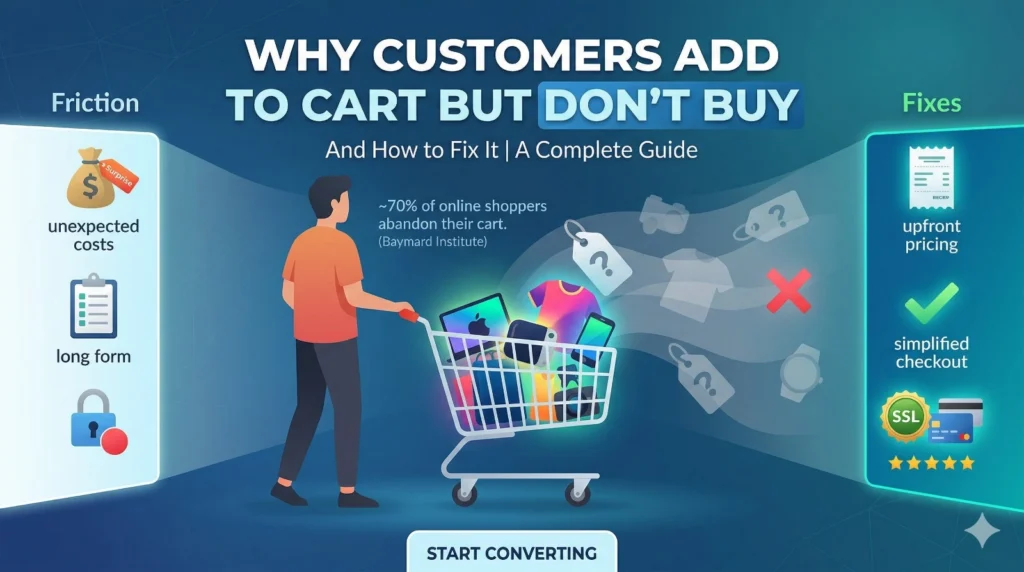
    ~70% of online shoppers abandon their cart before completing a purchase. (Baymard Institute)

    That means for every 10 customers who show clear buying intent – picking a product, adding it to their cart, 7 walk away without spending a single rupee. If you’re running an e-commerce store, this number represents thousands of rupees in lost revenue every single month.
    The good news? Cart abandonment is not a dead end. These users are interested. They’ve already done the hard part. Your job is simply to remove the friction that’s stopping them from clicking “Place Order.”

    What Is Cart Abandonment?

    Cart abandonment happens when a shopper adds items to their cart but exits the website before completing the purchase. It’s one of the most common and costly problems in e-commerce.

    It’s not always a bad sign. Many users are genuinely interested. The real issue is conversion friction: something gets in the way between interest and action.

    Top Reasons Customers Don’t Complete Their Purchase

    1. Unexpected Extra Costs

    This is the #1 reason for cart abandonment worldwide. Customers see a product at ₹499, but at checkout, the total jumps to ₹699 after shipping, taxes, and handling fees. That surprise kills trust instantly.

    How to Fix It:

    • Show the total cost upfront on the product page itself
    • Offer a free shipping threshold (e.g., “Free shipping above ₹999”)
    • Be fully transparent about taxes and additional charges before checkout

    2. Complicated Checkout Process

    A long, confusing checkout process is a conversion killer. If a customer has to fill out 5 screens of forms just to buy a ₹300 item, they’ll leave.

    How to Fix It:

    • Enable guest checkout, don’t force account creation
    • Reduce form fields to only what’s absolutely necessary
    • Use a one-page or two-step checkout flow

    3. Lack of Trust Signals

    If your website looks untrustworthy or unprofessional, customers won’t enter their payment details. This is especially important for first-time buyers.

    How to Fix It:

    • Display SSL security badges and secure payment icons
    • Add genuine customer reviews and star ratings
    • Make your return and refund policy clearly visible
    • Show a real contact number or live chat support

    4. Limited Payment Options

    India has a diverse payments ecosystem. If you only offer one or two options, you’re guaranteed to lose customers whose preferred method isn’t available.

    How to Fix It:

    • Accept UPI, credit/debit cards, net banking, wallets, and Cash on Delivery (COD)
    • Integrate popular payment gateways like Razorpay, Paytm, or PhonePe

    5. Slow Website Speed

    A page that takes more than 3 seconds to load loses a significant portion of its visitors. At checkout, even a 1-second delay can cost conversions.

    How to Fix It:

    • Compress and optimize all product images
    • Minimize heavy JavaScript and third-party scripts
    • Use fast, reliable hosting optimized for e-commerce

    6. ‘Just Browsing’ Behavior

    Many users add products to their cart as a way to save items for later comparison, similar to a wishlist. They’re not ready to buy right now.

    How to Fix It:

    • Use retargeting ads on Facebook and Google to re-engage these users
    • Send automated cart reminder emails within 1 hour of abandonment
    • Offer a limited-time discount to create urgency

    7. No Urgency or Incentive

    If there’s no urgency, customers feel no pressure to complete the purchase. “I’ll come back later” is the enemy of conversions.

    How to Fix It:

    • Show real-time low stock alerts (“Only 3 left!”)
    • Add countdown timers for limited-period deals
    • Offer flash discounts for customers who complete checkout within a time window

    8. Poor Mobile Experience

    In India, a large majority of e-commerce traffic comes from mobile devices. A clunky mobile interface directly translates to lost sales.

    How to Fix It:

    • Use a fully responsive design that works on all screen sizes
    • Simplify mobile navigation and reduce tap targets
    • Optimize the mobile checkout flow, minimize typing, and use autofill

    Proven Strategies to Reduce Cart Abandonment

    1. Use Exit-Intent Popups

    When a user moves their cursor toward the browser’s close button, trigger a pop-up with a compelling offer.

    💡 Example: “Wait! Here’s 10% off your order, valid for the next 15 minutes only.”

    • Offer a discount code or free shipping coupon
    • Show a reminder of items left in their cart
    • Keep it simple — one clear call to action

    2. Send Abandoned Cart Emails

    Automated email sequences are one of the highest ROI recovery tools in e-commerce. Even a single well-timed email can recover a significant percentage of lost sales.

    Best Practices:

    • Send the first email within 1 hour of abandonment
    • Include product images and the exact items left in the cart
    • Add urgency: “Your cart is about to expire,” or “Only 2 left in stock.”
    • Follow up with a second email after 24 hours with a small discount offer

    3. Optimize Checkout UX

    Your checkout page should be fast, simple, and trustworthy. Every extra step or form field is a potential drop-off point.

    • Use progress indicators so users know how many steps are left
    • Auto-fill address fields using PIN code lookup
    • Display trust badges and accepted payment icons prominently

    4. Offer Free Shipping or Easy Returns

    Free shipping is one of the most powerful conversion triggers in e-commerce. It removes a key objection at the moment of decision.

    💡 “Free shipping above ₹999.” This single change can significantly boost both conversions and average order value.

    • Offer easy, no-questions-asked returns to reduce purchase hesitation
    • Clearly communicate your return policy on the product and cart pages

    5. Add Social Proof

    People trust what other people have bought. Social proof reassures hesitant buyers that they’re making the right choice.

    • Display verified customer reviews and ratings on product pages
    • Show “X people bought this today” or “Recently purchased” notifications
    • Feature user-generated photos in reviews for authenticity

    6. Run Retargeting Ads

    Not all abandoned carts can be recovered by email. Retargeting ads on Facebook, Instagram, and Google allow you to reach customers wherever they go next.

    • Show dynamic ads featuring the exact products they left in their cart
    • Offer a limited-time discount to incentivize return
    • Set frequency caps to avoid over-showing ads

    Quick Reference: Problems and Fixes

    ProblemQuick Fix
    Hidden extra costsShow full price upfront; offer free shipping threshold
    Complicated checkoutEnable guest checkout; reduce form fields
    No trust signalsAdd an SSL badge, reviews, and a clear return policy
    Limited payment optionsAccept UPI, cards, wallets, and COD
    Slow websiteOptimize images; use fast hosting
    Just browsingRetargeting ads + cart reminder emails
    No urgencyLow stock alerts + countdown timers
    Poor mobile UXResponsive design + simplified mobile checkout

    Conclusion

    Cart abandonment is not a failure; it’s an opportunity. Every abandoned cart represents a customer who was interested enough to engage with your product. Your job is to remove the friction, rebuild the trust, and create the urgency that converts that interest into a sale.

    Start with transparent pricing, fast checkout, and a well-timed cart recovery email. Then layer in social proof, retargeting, and mobile optimization to build a complete recovery system.

    If you’re looking for a platform that makes all of this easier, Siyahfy, an advanced e-commerce website builder, comes with fast-loading pages, mobile-optimized design, and built-in marketing tools, so you can focus on growing sales instead of managing tech.

    💡 Ready to reduce cart abandonment? Build your store on Siyahfy today.

  • How To Choose Best Ecommerce Platform in India for Starting Your Online Business

    How To Choose Best Ecommerce Platform in India for Starting Your Online Business

    Starting an online business today is easier than ever, but choosing the right platform can make a huge difference in your success. With the rapid growth of digital shopping and mobile commerce, entrepreneurs are looking for tools that help them launch, manage, and grow their online stores efficiently.
    If you are searching for the best ecommerce platform in India, you need a solution that combines simplicity, powerful features, and affordability.

    This is where Siyahfy comes in. This is designed to help entrepreneurs, startups, and small businesses create a professional ecommerce website without technical complexity. Whether you want to start a small online store or scale a growing business, the right platform can simplify your entire ecommerce journey.

    Why Choosing the Right Ecommerce Platform

    Launching an online store is more than just creating a website. You need a system that manages products, orders, payments, and customer experience seamlessly. When selecting the best ecommerce platform in India, businesses usually look for several key features:

    • Easy website creation without coding
    • Secure payment gateway integration
    • Mobile-friendly design
    • Inventory and order management
    • Marketing and SEO tools
    • Scalability for future growth

    A platform that includes all these capabilities allows entrepreneurs to focus on growing their brand instead of worrying about technical challenges.

    Siyahfy – A Smart Ecommerce Website Builder

    Siyahfy is a modern ecommerce website builder designed specifically for businesses that want a quick and reliable way to start selling online. Instead of dealing with complicated development processes, users can create their ecommerce website with simple steps.

    Many entrepreneurs searching for the best ecommerce platform in India want a platform that combines flexibility with ease of use. Siyahfy offers an intuitive dashboard that helps store owners manage products, pricing, and orders from a single place.

    With Siyahfy, you can create a fully functional ecommerce website without hiring developers or spending months building a store. This makes it a practical choice for startups and small businesses that want to launch quickly.

    Key Features

    Easy Store Setup

    Siyahfy allows users to build an online store quickly with a simple setup process. Even beginners with no technical background can create their ecommerce website and start selling products.

    Mobile-Optimized Stores

    Most online shoppers in India use mobile devices. Siyahfy ensures your ecommerce website works smoothly on smartphones and tablets, providing a seamless shopping experience for customers.

    Secure Payment Integration

    Online payments are a crucial part of ecommerce. Siyahfy supports secure payment gateway integration so customers can pay safely through trusted payment methods.

    Product and Inventory Management

    Managing products becomes simple. Store owners can add products, update prices, track inventory, and manage orders from a single dashboard.

    Built-in Marketing and SEO Tools

    To grow an ecommerce business, visibility on search engines is essential. Siyahfy includes built-in tools that help businesses improve their online presence and attract customers through organic search.

    These capabilities make it easier for entrepreneurs to run their ecommerce operations efficiently.

    Why Siyahfy is the Right Choice for Online Businesses

    India’s ecommerce industry is expanding rapidly, and thousands of businesses are moving online every year. Entrepreneurs looking for the best ecommerce platform often struggle to find a platform that is both powerful and beginner-friendly.

    Siyahfy solves this problem by offering a balanced solution that combines usability and advanced ecommerce features. Businesses can create professional online stores while keeping costs and complexity under control.

    Another advantage of Siyahfy is that it focuses on providing tools that help businesses grow. From product management to marketing support, the platform is designed to help online sellers succeed in a competitive market.

    Start Your Online Store

    Launching an ecommerce business no longer requires technical expertise or large investments. With platforms like Siyahfy, entrepreneurs can build and manage their online stores efficiently.

    If you want to create a reliable online store, selecting the best ecommerce platform becomes an important first step. Siyahfy provides the tools, flexibility, and ease of use required to build a strong digital presence.

    Whether you are a small business owner, a startup founder, or someone planning to sell products online, Siyahfy can help you turn your ecommerce idea into a successful online store.

  • What is E-commerce and Why Online Stores Matter Today?

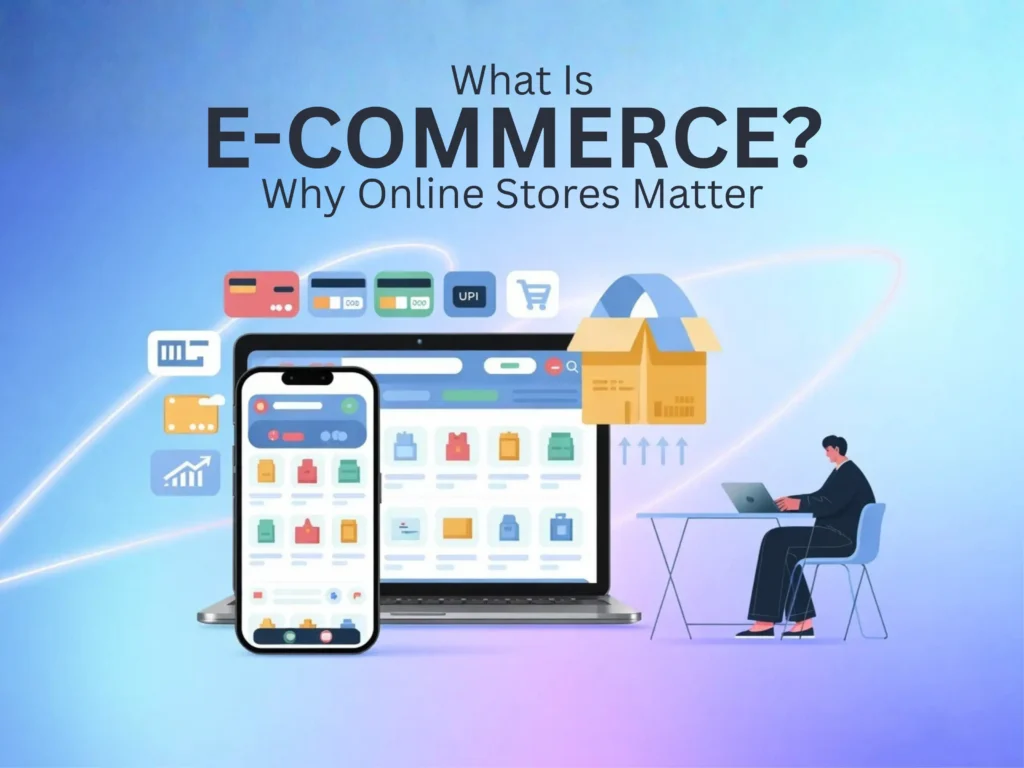
    What is E-commerce and Why Online Stores Matter Today?

    E-commerce simply means buying and selling products online. Instead of running only a physical shop, businesses now sell through websites where customers can browse products, place orders, and make payments online.

    Today, online stores matter because:

    1. Customers prefer shopping from home
    2. People search online before buying anything
    3. Digital payments and UPI are widely used
    4. A website builds trust and brand value
    5. Businesses are no longer limited to one city

    Because of this shift, many people want to create an online store, but they face one big problem – technical complexity.

    That’s where beginner-friendly platforms come in.

    Why Online Stores Have Become Important

    Customer behaviour has changed significantly. Convenience, speed, and access to information now influence most buying decisions. Online stores help businesses stay relevant because:

    • Customers prefer browsing and ordering from home
    • Search engines influence purchase decisions
    • Digital payments and UPI are widely accepted
    • A website builds trust and brand credibility
    • Businesses are no longer restricted to one location

    Because of these changes, many small businesses and individuals want to sell online. However, the process often feels complicated due to technical requirements.

    The Challenge of Starting an Online Store

    Creating an e-commerce website traditionally involves multiple steps, including buying hosting, setting up software, managing security, and handling technical maintenance. For beginners, this can feel overwhelming and expensive.

    This is where no-code platforms make a difference.

    What is Siyahfy?

    Siyahfy is a no-code e-commerce website builder created for beginners and small businesses. It allows users to set up an online store without writing code or hiring a developer.

    The platform is designed to keep things simple. Instead of spending time on technical setup, users can focus on adding products, managing orders, and serving customers. Siyahfy is especially helpful for those starting their first online business or moving from offline selling to digital.

    How Siyahfy Works

    Siyahfy follows a straightforward setup process that is easy to understand, even for non-technical users.

    Store Setup

    Users can sign up and choose from ready-made store templates. Hosting and technical configurations are handled by the platform, so there is no need for manual setup.

    Product Management

    Products can be added by uploading images, setting prices, writing descriptions, and organizing categories. Inventory is managed from a single dashboard.

    Orders and Dashboard

    The dashboard allows users to view orders, track customer details, and update order statuses. Everything is managed from one place.

    Payments and Pricing

    Siyahfy supports online payments as well as Cash on Delivery. The pricing is structured to be affordable for small and growing businesses, especially when compared to custom website development.

    Who Can Benefit From Siyahfy?

    Siyahfy is suitable for people who want to start selling online without dealing with technical complexity. This includes:

    • Small business owners shifting from offline to online
    • Home-based sellers
    • Creators selling physical products or merchandise
    • Entrepreneurs testing a new business idea

    By simplifying the technical side, the platform allows users to focus on marketing, customer experience, and product quality.

    Practical Use Cases

    Many beginners delay launching their online store because they assume the process is difficult. In reality, platforms like Siyahfy make it much more accessible.

    A local shop can reach customers outside its city. A creator can sell directly through a personal website. A small brand can explore online sales without heavy upfront investment. In each case, the focus is on ease of use rather than complex customization.

    Start your online store today with Siyahfy and turn your business idea into a live ecommerce website in minutes — no coding, no stress, just selling.

  • How To Build An Ecommerce Website Just in One Click: A Beginner-Friendly Step-by-Step Guide

    How To Build An Ecommerce Website Just in One Click: A Beginner-Friendly Step-by-Step Guide

    How To Build an ecommerce website in just one click is no longer a technical or complicated process. With modern ecommerce website builders, businesses can now go online without worrying about servers, hosting setup, or coding.

    This makes ecommerce accessible to startups, small businesses, and first-time founders who want to start selling online quickly and confidently.

    This guide explains how to build an ecommerce website in India, using a clear, step-by-step approach that focuses on simplicity, usability, and long-term growth.

    Decide What You Want To Sell Online in India

    The first step is clarity. Before building your ecommerce website, you must understand what you want to sell and who your customers are.

    This could be physical products, digital items, or services. You should also decide whether you want to target a local audience, PAN-India customers, or a specific niche.

    When this foundation is clear, every other decision, design, pricing, content, and marketing becomes easier. Many e-commerce websites struggle because this step is skipped or rushed.

    Choose an Ecommerce Website Builder (No Technical Setup Required)

    An ecommerce website builder is the platform that helps you create, manage, and scale your online store. Today’s platforms are designed for non-technical users and provide everything needed to run an ecommerce business in one place.

    The right platform should be:

    • Easy to use: No-code drag-and-drop interfaces.
    • Mobile-friendly: Since 80%+ of Indian shoppers use smartphones.
    • Secure: Built-in SSL certificates to protect customer data.

    Choosing the right platform at this stage saves time, reduces costs, and avoids unnecessary complexity later.

    Choose a Domain Name for Your Online Identity

    Your domain name is your store’s online identity. It should be simple, easy to remember, and aligned with your brand. For Indian businesses, .in and .com domains are commonly trusted and work well.

    Pro Tip: Keep it short. Avoid using hyphens or numbers which can confuse customers when they type your URL.

    Select a Theme and Design That Builds Trust

    Your website’s design is the “digital storefront” of your business. When using a builder like Siyahfy, you don’t need to design from scratch; instead, you select a pre-built theme that aligns with your brand.

    When choosing a theme, look for these three essentials:

    • Professional Layout: Choose a clean, modern design. A cluttered website confuses visitors, while a professional theme builds immediate trust with Indian shoppers.
    • Mobile-First Design: Since over 80% of online shopping in India happens via smartphones, ensure your theme is fully responsive and looks perfect on mobile screens.
    • Speed Optimization: In India, users often shop on varying network speeds (4G/5G). Select a lightweight theme that loads in under 3 seconds to prevent customers from leaving before your products even appear.

    A well-chosen theme ensures that your “Buy Now” buttons are easy to find, helping users move smoothly from browsing to checkout.

    Add Products and Categories the Right Way

    Each product page should clearly explain what the product is and how it helps the customer.

    • Focus on Benefits: Instead of listing features only, explain the value in simple language.
    • SEO Keywords: Use terms like “Best [Product] in India” or “Buy [Product] Online” in your descriptions to help Google find you.
    • High-Quality Images: Indian shoppers rely heavily on visuals before making a purchase.

    Set Up Secure Payments (UPI, Cards, and Wallets)

    To sell online in India, your website must support trusted and familiar payment options. Customers expect a smooth checkout experience with:

    • UPI (GPay, PhonePe, Paytm)
    • Debit and Credit Cards
    • Net Banking and Digital Wallets

    A secure and seamless payment process builds customer confidence and significantly reduces cart abandonment.

    Configure Shipping, Delivery, and GST

    Clearly communicate shipping charges, delivery timelines, and return policies.

    • GST Compliance: If your business is GST-registered, configure your taxes correctly to ensure compliant invoicing.
    • Legal Tip: While you can start building your site today, most Indian payment gateways will require a GST number and a Business Current Account to settle your payments.

    Your “Go-Live” Checklist

    Before you hit launch, ensure these five items are checked:

    • Domain: Is your .in or .com domain connected?
    • Mobile Test: Does the site look good on a smartphone?
    • Payments: Did you run a successful test transaction?
    • WhatsApp Integration: Do you have a chat button for customer queries? (Highly recommended for Indian stores!)
    • Policy Pages: Are your “Terms & Conditions” and “Refund Policy” visible?

    How Siyahfy Simplifies E-commerce in India

    While the steps to create a website remain the same, the experience depends heavily on the platform you choose. This is where Siyahfy fits naturally into the process.

    Siyahfy is designed as a no-code, all-in-one ecommerce platform. We handle the technical heavy lifting, security, hosting, and server management, so you can focus on your products and customers.

    With Siyahfy, you can:

    • Launch a professional store in minutes without coding.
    • Manage orders and accept UPI/Card payments from a single dashboard.
    • Scale your business with built-in tools designed specifically for the Indian market.

    Quick Answer: Siyahfy simplifies ecommerce by offering a no-code platform where setup, security, and management are handled automatically, allowing Indian businesses to launch without technical complexity.

    Conclusion: Build an Ecommerce Website

    Once your store is live, promotion becomes the focus. Share your website on social media, use WhatsApp marketing, and focus on SEO to build long-term visibility.

    Creating an ecommerce website in India has never been more accessible. With a clear plan and a beginner-friendly platform like Siyahfy, you can turn your business idea into a reality today.

    🚀 Ready to start selling online? Build your ecommerce website with Siyahfy today and take your business to every corner of India!


  • Ecommerce Website Builder in India: Build Your Online Store Easily with a One-Click

    Ecommerce Website Builder in India: Build Your Online Store Easily with a One-Click

    Starting an online business in India is no longer a “tech-heavy” dream. Gone are the days when you needed deep coding knowledge or a massive budget to launch a professional store. With a modern one-click ecommerce website builder in India, you can go from “idea” to “open for business” in minutes.

    Whether you are a small business owner in Mumbai, a startup founder, or a creator looking to sell products online for the first time, this guide explains why a one-click builder is your best shortcut to success.

    What Is a One-Click Ecommerce Website Builder?

    Think of it as a “ready-to-move-in” shop. Instead of building walls (coding) and installing lights (designing), a one-click builder gives you a fully functional store instantly.

    With platforms like Siyahfy, the hard work, layout, mobile optimization, and payment integration is done automatically. You just add your products and start selling.

    Best Ecommerce Website Builders in India: 2026 Comparison

    To help you choose, here is how the top players in the Indian market stack up:

    FeatureSiyahfyShopify
    Best ForQuick Setup & GrowthLarge Global Scaling
    Setup SpeedInstant (One-Click)Moderate
    Payment OptionsUPI, Razorpay, PayUThird-party Apps
    Indian NeedsGST & Local SupportRequires Setup
    Ease of UseVery HighHigh

    Why These Platforms Are Popular in India

    An online store builder in India needs to solve local problems. Here’s why these tools are winning:

    • Affordability: No need to pay lakhs to developers.
    • Local Payments: Support for UPI (PhonePe, Google Pay), which is essential for Indian customers.
    • GST Ready: Automatically calculate taxes without manual headaches.
    • Mobile First: Since most Indians shop on their phones, these builders ensure your store looks perfect on every screen.

    Spotlight: Why Choose Siyahfy?

    If you are looking for a modern, “Made for India” solution, Siyahfy is a powerful choice. It is designed to remove the technical barriers that stop most entrepreneurs.

    • One-Click Launch: You don’t need to spend days designing. Siyahfy sets up the core structure for you.
    • Built-in Marketing: It comes with integrated SEO tools and email campaign features to help you find customers faster.
    • No Coding Required: It is truly a “zero-code” platform, making it perfect for beginners.
    • Scalable Performance: While it’s easy to start, it’s built to handle high traffic as your brand grows.

    How To Choose the Right Online Store Builder

    Before you sign up, check these 3 “must-haves”:

    1. Transparent Pricing: Look for plans in INR to avoid currency fluctuation stress.
    2. Scalability: Can the platform handle 10 products today and 1,000 next year?
    3. Support: Ensure they have a reliable team to help them when they get stuck.

    Step-by-Step: Build Your Store in Minutes

    1. Sign up for a one-click builder like Siyahfy or Shopify.
    2. Enter business details (Name, GST, Category).
    3. Watch your store appear instantly.
    4. Upload products with photos and prices.
    5. Connect UPI/Bank for payments.
    6. Go Live!

    Conclusion

    Choosing the right ecommerce website builder in India is the most important decision for your digital journey. If you want a balance of speed, simplicity, and professional features, a one-click builder like Siyahfy is the best way to start.

    Stop overthinking the “how” and start focusing on the “what”- your products.

    👉 Ready to launch? Try a one-click builder today and bring your business online!